


What to Pack for Soccer Camp: 10 Essentials for 2026

The bag sits by the front door the night before camp, and by 7:40 a.m. it's in the back seat while you drive east with the sun already square in the windshield. A 9 a.m. session on an open field in July starts hot and gets hotter, and the first sprint drills begin before the warm-up has finished. Every item in that bag should earn its place by solving a problem your child will hit that day.
Most packing lists are gear inventories. This one follows the camp day in order, from the car ride in to the drive home, because when a thing is needed tells you more about whether to pack it than any generic checklist. Cleats matter at 8:55. Sunscreen matters at 9:30. A dry shirt matters at noon, and a towel matters at 3.
Houston adds problems a national checklist won't cover: humidity that slows sweat evaporation, artificial turf that holds heat, and a heat index that runs well above the air temperature. So each entry below ties one piece of gear to one moment in the day, explains the trade-off behind it, and names the things you can leave at home. Use this packing guide for soccer camp when the camp is here, in June and July, on an open field.
1. Soccer Cleats That Match the Surface
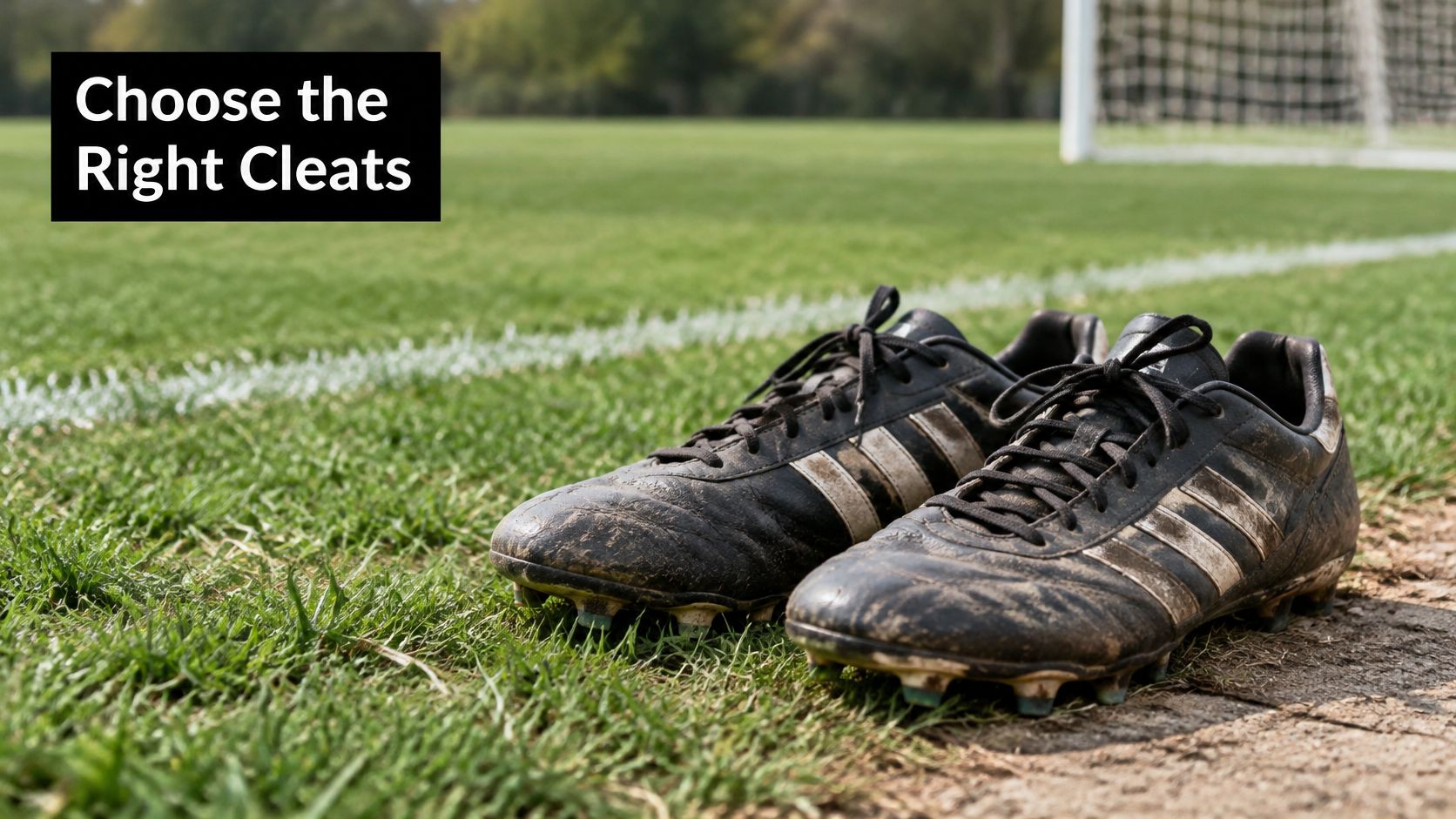
By 8:45 a.m. your player is walking from the car to the field, and the shoes decide how the rest of the morning goes. Houston sessions run on natural grass, artificial turf, and sometimes indoors, and a firm-ground cleat on turf is a slip waiting to happen. Buy for the surface the camp uses, not the one in the photo on the registration page.
The IFAB Laws of the Game fold footwear into a player's equipment and bar anything dangerous, which is why metal studs and loose jewelry come off before a session starts. The same law requires a missing shin guard or shoe to be replaced no later than the next stoppage, and that single line explains the spare laces, the roll of athletic tape, and the backup pair of shoes in the bottom of the bag.
Break Them In Before Camp, Not During
Cleats bought the week of camp are a blister machine. Wear new pairs for two or three short training sessions at least a week or two out, and measure feet in the evening when they're widest. If you're replacing a pair, a youth cleat buying guide covers width, stud shape, and the difference between firm-ground and turf soles.
Spare laces: one set costs a few dollars and saves a session when a lace snaps in a tackle.
Blister plasters: apply at the first hot spot, not after the skin opens.
No growth room: oversized shoes cause the slipping and rubbing that small feet can't correct mid-sprint.
2. Shin Guards That Actually Stay Put
Shin guards are one of five items the Laws of the Game make compulsory, right alongside the shirt, shorts, socks and footwear, but they're the one most likely to fail a player mid-session. FIFA made shin guards compulsory in 1990, and the laws still require guards made of suitable material, sized to give reasonable protection, and worn under socks. That last clause is the one parents miss, and it's why sock choice and guard choice are really one decision.
A guard that slides sideways protects nothing. Skip the buy-ahead sizing for future growth and fit the player you have this summer: a guard that's too long rides up over the kneecap during running, and one that's too narrow leaves the outside of the shin exposed in exactly the challenges where it matters. In Houston heat, sweat loosens a borderline fit within the first hour, so a guard that passes the test in your living room can still fail by the second water break.
The fit test takes ten seconds. With the sock pulled up, press the guard sideways with your thumb. If it shifts, it's the wrong size, the wrong sock, or both.
Position the top edge two to three fingers below the kneecap so the shin is fully covered, and retire any guard that's cracked, compressed, or curling at the edges. Our guide to sizing shin guards for young players walks through the measurement, and the clip below shows the sock-and-guard check in motion:
3. Soccer Socks, Three Pairs Minimum
The second and third pairs of socks are the item parents forget, and they're the cheapest comfort upgrade in the bag. Full-length socks hold the guards in place and take the friction that would otherwise land on skin and blisters. On a full camp day a player may train three or four hours across two sessions, and a sweat-soaked sock against a damp shin guard is how hot spots start at 10 a.m. and end a session early at 2 p.m.
Three pairs, not one: morning pair, midday change, and a dry spare for the ride home.
Synthetic blends over cotton: moisture moves off the foot instead of sitting against it.
Team or academy colors: confirm the camp's kit requirement before you buy, since some programs ask for specific colors.
Cold wash, no dryer heat: elastic in the cuff dies in a hot dryer and the socks start sliding down mid-session.
Pack the spare pair inside a small mesh bag with the shin guards so the change is one grab, not a search through a duffel. If your player is prone to blisters, turn socks inside out before washing to clear grit from the seams.
4. A Water Bottle Sized for the Session
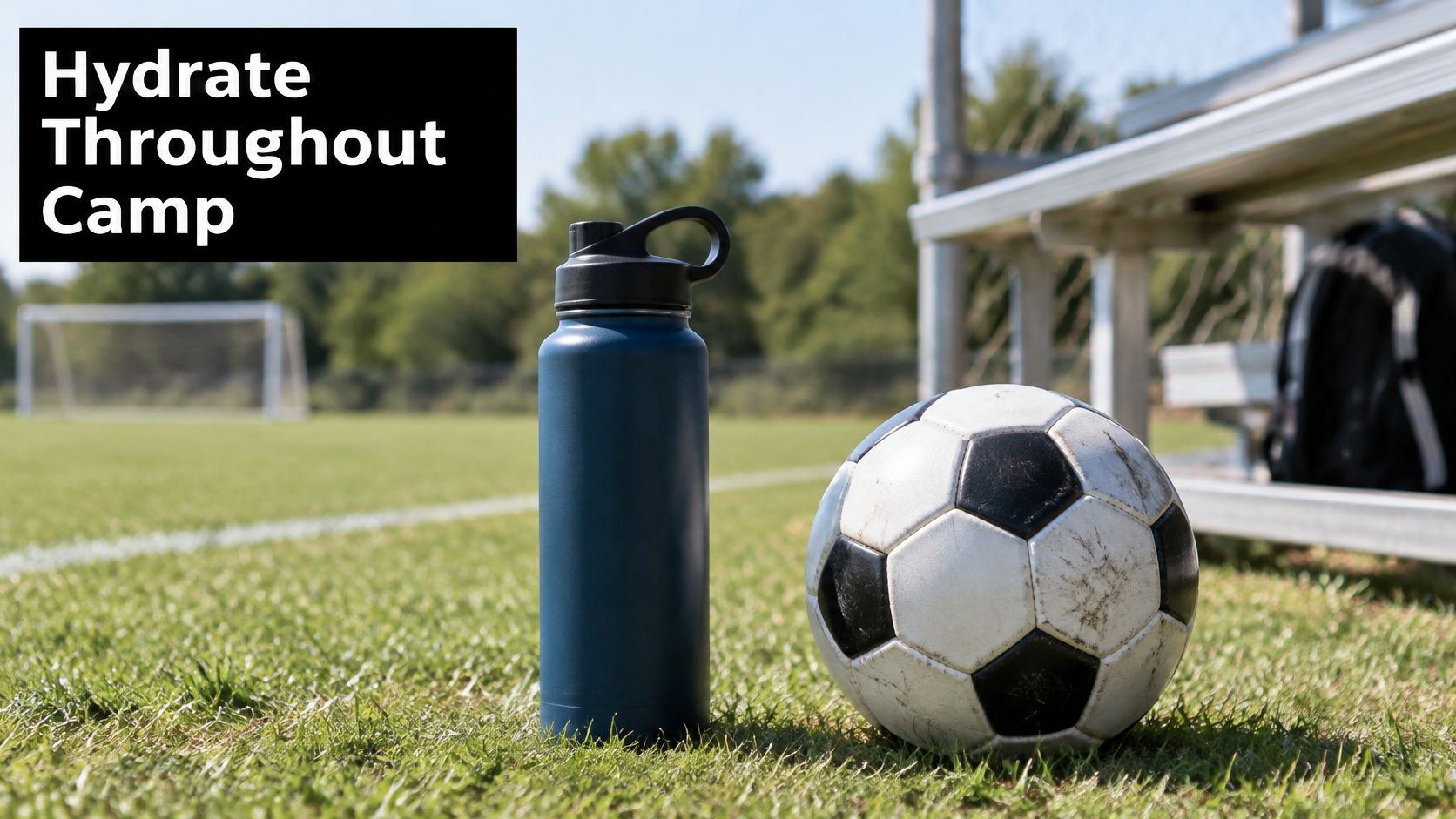
A water bottle is the piece of gear your child touches more than the ball. Size it to the schedule, not to habit: a single 20-ounce bottle is not enough for a three-hour Houston morning, and two labeled bottles plus refill access is the practical minimum for a full-day camp.
The numbers are worth knowing. The National Athletic Trainers' Association guidance on hydration for young athletes recommends roughly 3 to 5 fluid ounces every 20 minutes for athletes ages 9 to 12, and up to 9 to 13 ounces every 15 minutes for older athletes during activity. The same guidance notes that electrolyte beverages can be appropriate for sessions lasting an hour or more, repeated sessions in one day, strenuous exercise, or hot weather. It also warns against salt tablets, which can deliver excessive sodium to a child.
Hydration math: a 10-year-old at a three-hour morning session lands somewhere between 27 and 45 ounces, which is why one bottle and a refill stop is the baseline and not the generous option.
Freeze the bottle half full the night before and top it with cold water in the morning, write the name on the lid in permanent marker, and add a second bottle or an insulated backup for afternoon sessions. I tell parents to weigh their player before and after an unusually hot day, since the NATA identifies pre-activity and post-activity weight as a way to individualize rehydration rather than guess.
5. Sun Protection for an Open Field
Sunburn at camp rarely happens at 9 a.m. It happens at 11:30, on the back of a neck, during the third water break of a session that's already two hours old. This is the item that costs the least and gets skipped the most.
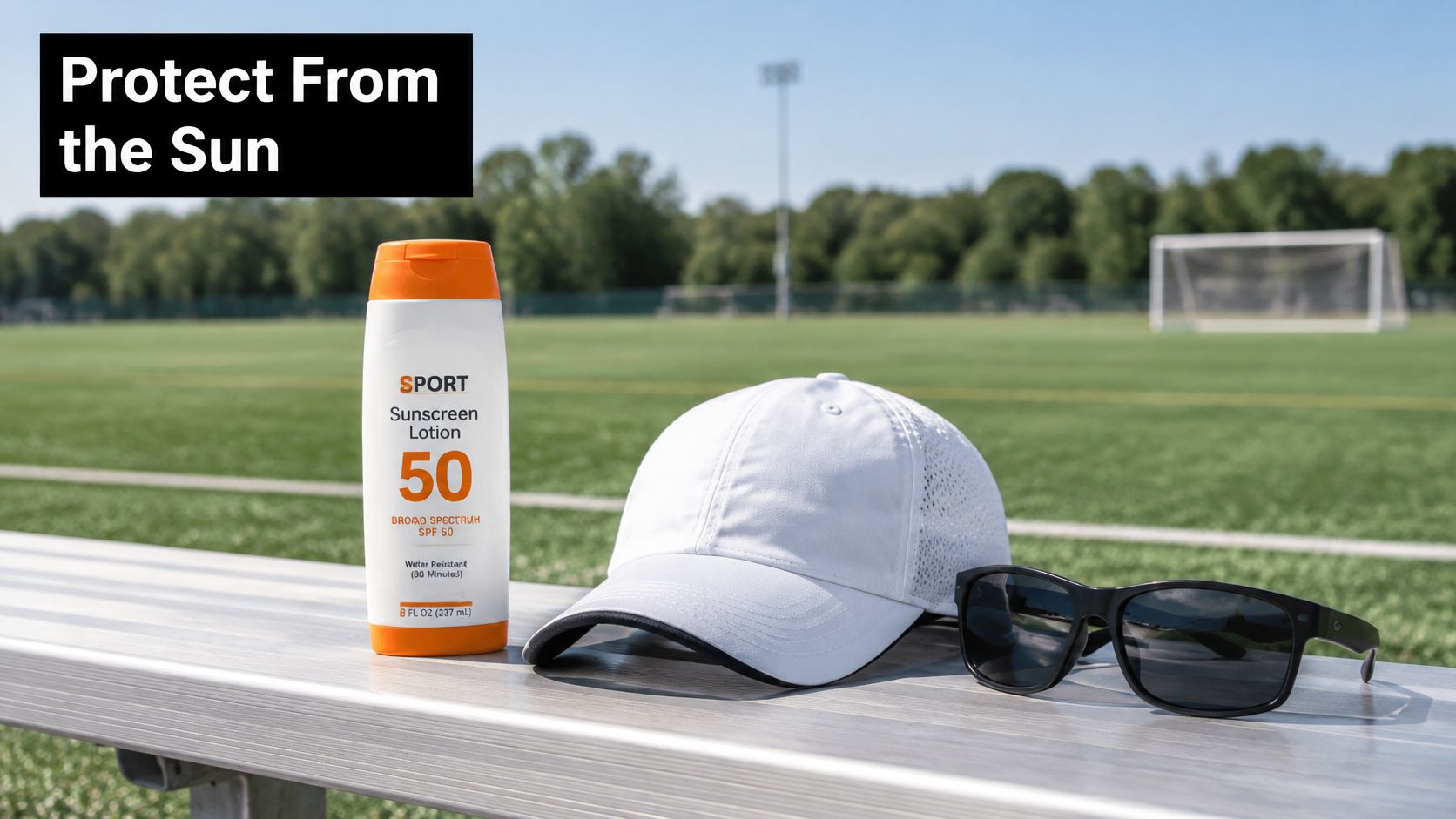
The U.S. Environmental Protection Agency's page on heat and teenage athletes reports that roughly 9,000 high-school athletes in the United States receive treatment for heat-related illnesses each year. The same page cites American Academy of Pediatrics guidance that outdoor temperatures of 75 to 80°F can become dangerous once the heat index reaches 90°F, and that a heat index of 105°F or higher is a danger day when children should limit outdoor activity. Sunscreen at SPF 15 is the stated minimum; SPF 30 or higher is the practical pick for hours of exposure.
Reapply Like It's Part of the Schedule
Apply 15 to 30 minutes before the first session, then again at the midday break and after heavy sweating, using a water-resistant formula for full-day camps. A stick sunscreen on the face and ears beats a lotion that runs into the eyes at the first sprint.
Hat with a chin strap: a loose cap becomes a distraction during heading drills and a lost item by day two.
Sunglasses: optional, but worth it on turf, where glare off the surface adds to eye strain.
Cooling towel: helps at breaks, but it doesn't replace shade, rest, or coach-directed hydration.
Evening sessions bring mosquitoes, so if your player wears repellent, the order matters. Sunscreen goes on before insect repellent, not after it.
6. A Moisture-Wicking Training Kit
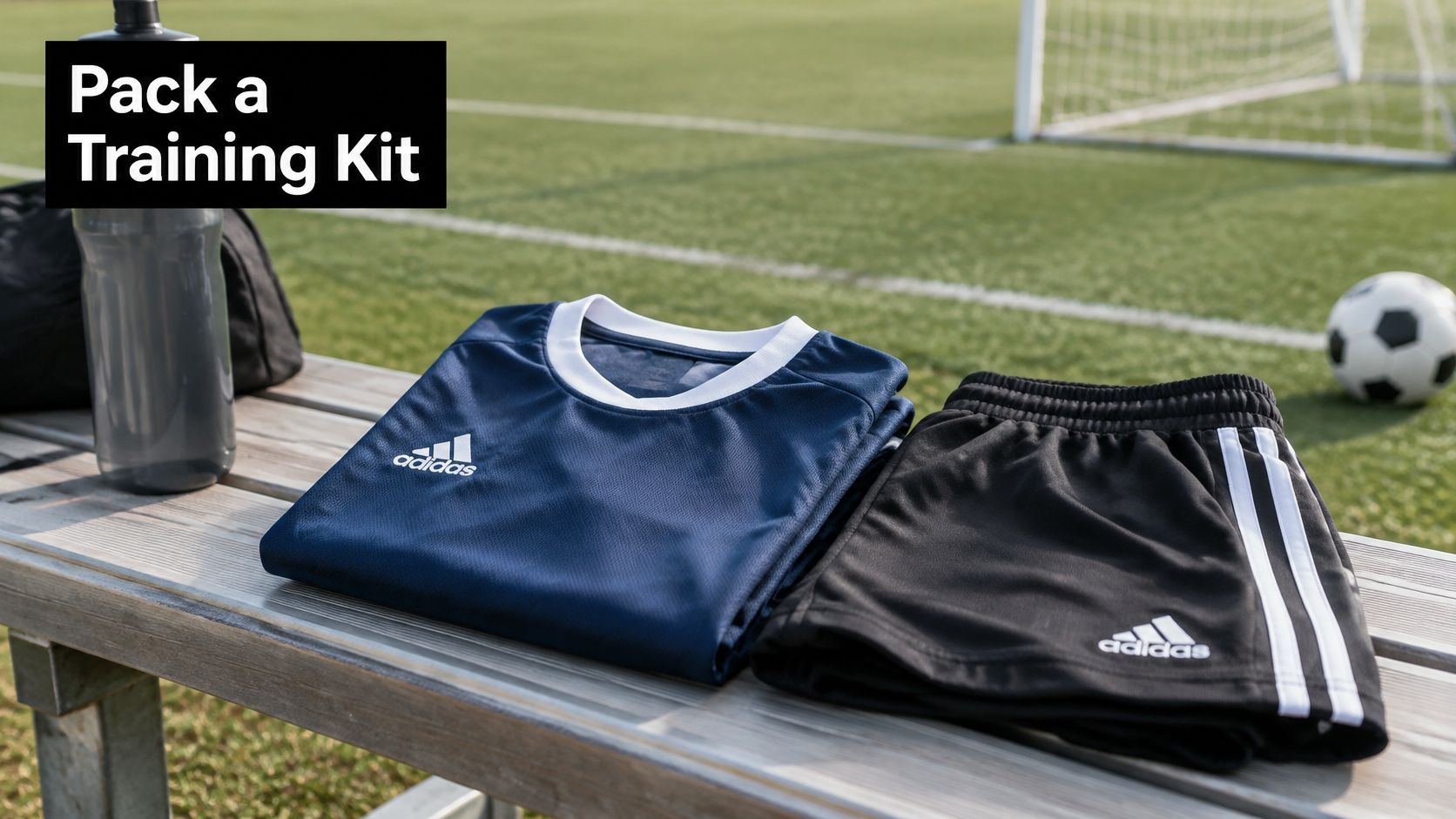
Houston humidity changes what fabric does. Cotton soaks, clings, and stays wet for hours, while a performance jersey moves sweat to the surface where it can evaporate and keeps the player cooler between drills. That difference shows up most in the second session, when a cotton shirt from the morning is still damp and heavy.
Two or three sets: a morning kit, a midday change, and one dry set for the drive home.
Light colors: they reflect heat and hide less, which helps coaches spot a player who's overheating.
Cold wash, no fabric softener: softener coats the fibers and kills the wicking performance you paid for.
Confirm the uniform: some camps require a specific jersey color or logo, and a wrong shirt means a phone call home.
Compression wear under the kit is a personal choice, not a requirement. In Houston heat I'd rather a player wear a loose, light layer than a tight base layer that traps heat against the torso.
Cut the tags off before camp rather than after the first session, and put the player's initials inside the collar. Twenty kids in matching jerseys lose track of their own gear by Tuesday.
7. A Properly Sized Soccer Ball
Most camps supply balls for training, so bring one only if the camp asks, or bring one for the parking lot and the backyard. What matters is the size, because a size 5 ball under an eight-year-old's foot teaches bad habits and a size 3 ball does nothing for a teenager's striking technique. Match the ball to the player: size 3 for ages 4 to 8, size 4 for ages 8 to 12, and size 5 for ages 13 and older.
Keep It Inflated and Out of the Trunk
A soft ball rolls under the foot and ruins first touch, and a ball left in a parked car in July cooks its own bladder. Bring a pump and the correct needle, check pressure the night before, and store the ball inside the house, not the garage. Write the player's name on it in permanent marker, because camp balls migrate.
If you're unsure which size fits your player's age group, this breakdown of youth soccer ball sizes covers the ranges and the weight differences between them.
8. A Towel and a Bag That Handles Wet Gear
By 3 p.m. everything in the bag is damp, and the bag itself is the difference between a manageable mess and a science experiment. A quick-drying microfiber towel wipes sweat between sessions, dries a wet bench, and cleans mud off cleats before they go back in the car. A gear bag with a separate wet compartment keeps soaked socks away from the dry change shirt you packed for the ride home.
Mesh bag for guards and socks: one small bag so the wet stuff never touches the clean stuff.
Label the outside: name and a parent's phone number, in case the bag gets left on a field.
Empty it every night: wet kit out, bottle rinsed, towel hung. Bags only smell because nobody empties them.
Heat illness is the reason to talk to your player about speaking up, not just packing. The CDC's guidance on heat and athletes notes that muscle cramps can be an early warning sign of heat illness, and that athletes should not wait until they feel thirsty to drink.
Heat check: tell your player to report cramps, dizziness, confusion, unusual fatigue, or nausea to a coach immediately. Those are the signals that end a camp week early, and they're easier to catch at the first one than the fourth.
9. Snacks and a Lunch That Hold Up
Lunch is where camp days fall apart. A player who skips the midday meal or eats nothing but a bag of chips shows up to the afternoon session flat, and the coach sees the drop before the parent does. Pack a lunch built around carbohydrates with a modest amount of protein, and add a snack for the gap between sessions.
Build the Lunch Around the Second Session
No refrigeration needed: fruit, nut-free granola bars, pretzels, and a sandwich that survives a warm locker room.
Check the allergy policy first: many camps restrict nuts, and one email to the camp office settles it.
Timing over quantity: a balanced meal two to three hours before training sits better than a heavy one eaten 20 minutes before warm-ups.
Electrolytes belong in the bottle: a sports drink for a long, hot session is a reasonable call, but it doesn't replace food.
If you're prepping for a whole week, these snack ideas that survive a backpack translate directly to a camp duffel. Keep it simple. Familiar food eaten beats an ambitious packed lunch thrown away.
10. Registration and Medical Paperwork
None of the gear matters if your player can't get checked in. Completed registration, emergency contacts, allergy notes, and current medication details are what the staff need before the first whistle, and a missing form at 8:30 a.m. is the most avoidable delay on this list.
Submit before day one: confirm every online form is complete rather than assuming the confirmation email closed the loop.
Carry a paper copy: a waterproof folder in the bag with the signed forms and emergency numbers.
List medications and allergies: include dosage instructions and inhalers where relevant, and tell the coaching staff directly, not just the form.
Note anything the coach should know at the field: a healing injury, a recent illness, or a player who struggles in heat.
Put the folder in the same pocket every time, so the check-in conversation at the tent takes a minute instead of fifteen.
Quick comparison of the 10 camp packing essentials
Read this table in the order of the camp day: the top rows cover the walk-in and first drills, the middle rows cover the hours on the field in the heat, and the last rows cover lunch, the ride home, and check-in at the tent.
Item | Key Spec | Main Benefit | Quantity to Pack | Common Mistake |
|---|---|---|---|---|
Soccer Cleats (Firm Ground or Turf) | FG studs for natural grass; AG or TF soles for turf; snug, broken-in fit | Improves traction and control | One pair matched to the camp surface, plus a backup pair and spare laces | Wearing the wrong stud type or new, unbroken-in cleats |
Shin Guards | Padded hard-shell guards sized to cover the shin | Helps protect against kicks and collisions | One pair | Poor fit that slips down or leaves the shin exposed |
Soccer Socks | Knee-high, moisture-wicking fabric to hold guards in place | Reduces slipping and blister risk | At least three pairs | Packing cotton socks that hold sweat |
Water Bottle or Hydration System | Leak-resistant bottle, 24–32 ounces or larger | Supports regular hydration in hot weather | Two labeled bottles plus refill access | Forgetting to refill or drink regularly |
Sun Protection (Sunscreen, Hat, and Sunglasses) | Broad-spectrum, water-resistant SPF 30 or higher; breathable hat; optional sunglasses | Helps reduce sunburn and sun exposure | Sunscreen and a hat; sunglasses optional | Forgetting to reapply sunscreen |
Moisture-Wicking Training Kit | Lightweight, breathable, quick-drying fabric | Helps players stay comfortable in the heat | Two to three sets | Packing cotton or skipping camp uniform requirements |
Soccer Ball (Correct Size) | Size 3, 4, or 5 based on the player's age | Supports age-appropriate practice | One correctly sized ball, if bringing one | Bringing the wrong size or leaving it in a hot car |
Towel and Sweat-Resistant Gear Bag | Quick-drying towel and bag with ventilated or wet-item compartments | Keeps gear organized and helps separate wet items | One towel and one gear bag | Leaving wet gear sealed in the bag |
Healthy Snacks and Packed Lunch | Carbohydrate and protein options; insulated lunch box for perishable food | Supports energy and recovery | Enough food for the camp day | Packing food that spoils in heat or conflicts with allergy rules |
Camp Registration Paperwork and Medical Information | Signed forms, emergency contacts, and current medical details | Helps staff respond to health needs and speeds check-in | One completed set; keep a copy if possible | Bringing incomplete or outdated information |
The mistake column is where this table earns its place in the bag-check routine. Most camp-day problems are not missing items but small mismatches: turf soles on grass, one bottle for a double session, or a form that was emailed but never finished.
Pack the Night Before and Check It Twice
Lay the whole bag out on the kitchen table the evening before camp and walk it in order: cleats by the door, shin guards inside the socks, three pairs of socks, two or three kit sets, a labeled ball if the camp wants one, a full bottle plus a spare, sunscreen with enough left in it, a towel, a wet bag, lunch, and the folder of signed forms. Ten minutes of checking beats a 7:40 a.m. panic and a player who arrives without the one thing that gets them on the field.
The order matters more than the quantity. Each item on this list answers a moment: the shoes handle the walk-in and the first sprints, the guards and socks handle contact and the midday change, the bottle and the sunscreen handle the heat between 9 and 3, the kit and towel handle the wet, and the paperwork handles the five minutes at check-in that decide whether your child trains at all. Pack against those moments and you'll carry less, not more.
There's a trade-off worth naming. Overpacking is real, and a nine-year-old hauling a 20-pound duffel with three alternate outfits will lose half of it by Wednesday. The rule I use is one backup per critical item, not per category: one spare pair of socks, one spare shirt, one spare bottle, one plastic bag. Everything else is single.
Heat is the variable you can't pack your way out of. Bottles don't lower the heat index, and no amount of gear turns a 105°F afternoon into a safe session. What the bag does is remove the small failures, the missing guard, the empty bottle, the sunburned neck, that turn a hard day into a miserable one. Training intensity, shade, and rest breaks still belong to the coaches.
Label everything, including the bag and the bottle, with a name and a phone number, and empty and air the bag on the drive-home evening rather than letting wet gear sit until morning. Those two habits do more for a camp week than any single purchase.
If you want a structured environment where a bag like this gets used several times a week rather than once a summer, Villarreal Houston Academy runs competitive teams for ages 10 to 18 at Fall Creek Sports Complex, alongside camps, clinics, and junior academy programs across North Houston. The packing habits transfer directly: the same bottle, the same two kits, the same folder in the same pocket.
Villarreal Houston Academy is the official partner academy of Villarreal CF in the Greater Houston area, running camps, clinics, and competitive teams for boys and girls from age 4 upward across Humble, Fall Creek, Cypress, Tomball, and the Kingwood, Porter, and New Caney area. If your player is ready for a camp day built around real Houston heat and a clear development pathway, start with the camp and tryout information at Villarreal Houston Academy. Pack the bag once, and the rest of the summer takes care of itself.
Comments