


How to Order Youth Soccer Team Jerseys

The order usually starts with a simple question from a parent: “What size jersey should we choose?” Then the details arrive. The player is growing, tryouts are close, the tournament requires specific numbers, and Houston's heat makes a heavy shirt uncomfortable before halftime. A good uniform order has to solve all of those problems at once.
Youth soccer team jerseys are more than matching shirts. They support referee identification, reinforce team identity, affect comfort and movement, and create a recurring cost for families and clubs. The right process treats every kit as a compliance, identity, and lifecycle investment, not as a color choice made from a catalog.
Why the Right Jersey Decides More Than Uniform Day
A team can look organized during warmups and still have a poor kit plan. The numbers may be difficult to read, the goalkeeper may blend into the outfield, or a player may arrive with a shirt that restricts movement. These problems become visible at the worst time, often when the roster is lining up for inspection.
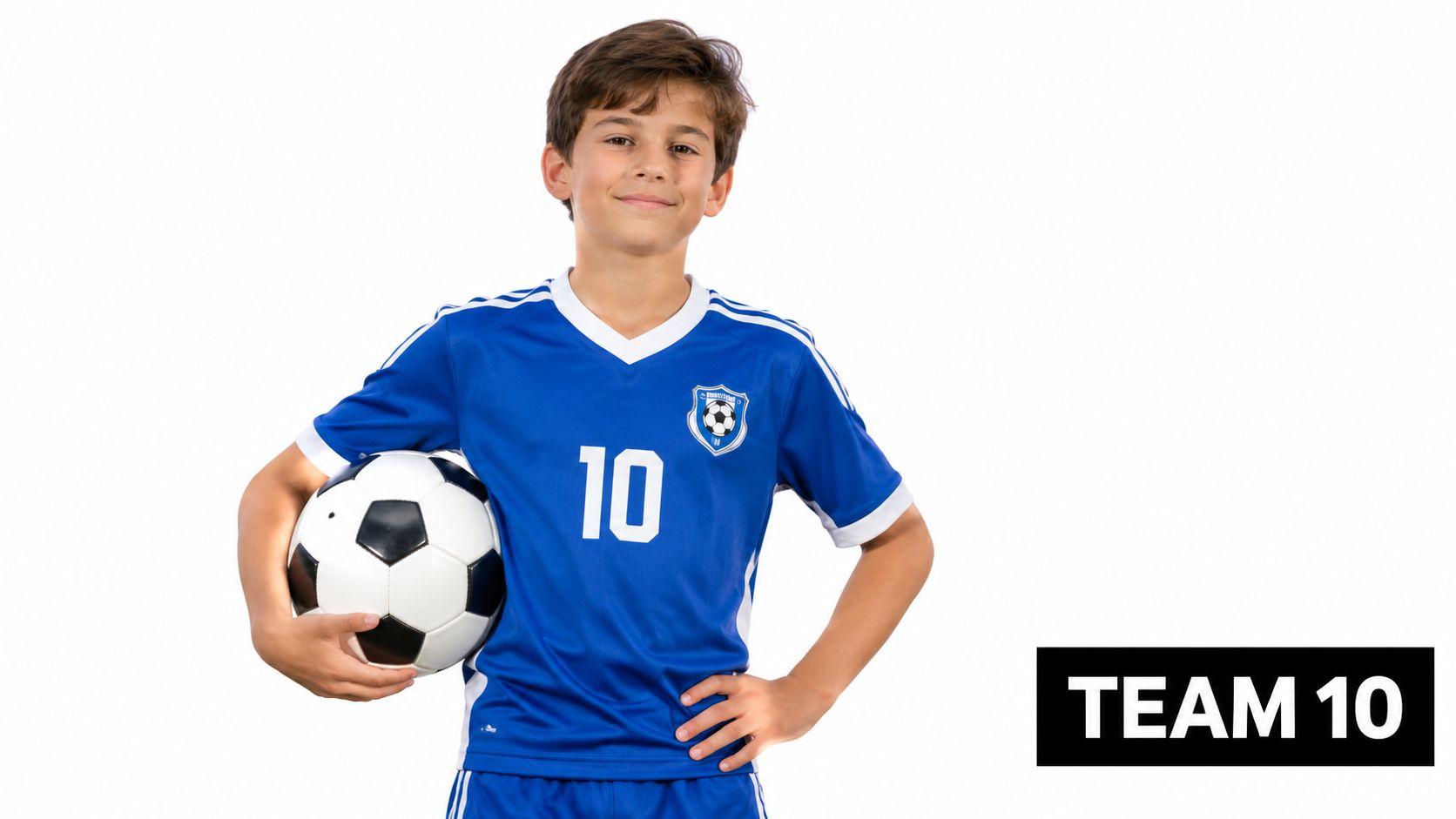
A jersey gives a young player a clear place in the group. The number helps referees, scorekeepers, families, and photographers identify players, while a consistent design tells children that practice, match day, and team responsibility belong together. That role has deep roots. Numbered shirts were recorded in Australia in 1911, appeared in England in 1928, and became more structured through FIFA competitions before persistent squad numbering arrived at the 1954 World Cup. The history of soccer jersey numbering shows how a practical identification tool gradually became part of the sport's visual identity.
The kit carries responsibility
For a Houston-area academy, the uniform also has to work across training, league matches, tournaments, and family logistics. A shirt that survives repeated washing, remains readable from the sideline, and fits a player through the season does more than create a polished photograph. It reduces last-minute conversations and helps a child feel prepared.
Teams often extend that identity beyond match shirts with coordinated accessories. When a club is considering caps for travel days, camps, or team events, Dirt Cheap Headwear team caps can be reviewed alongside the jersey colors and logo treatment. The same principle applies: choose an item that supports the team's identity without creating another confusing or unnecessary purchase.
Practical rule: Approve the jersey as part of the player experience, not as an isolated apparel item.
Team clothing can support belonging, but it can't replace good communication, respectful coaching, and shared standards. Clubs that want to connect uniforms with broader culture can also review guidance on building team cohesion. The jersey works best when it reflects a program that already gives players a clear role.
Evaluating Jersey Durability Before You Commit
A catalog image can't tell you whether a number will lift after washing or whether a shoulder seam will hold during a full season. Durability has to be tested on a production sample, not inferred from words such as “premium,” “pro fit,” or “performance.” Those labels aren't standardized durability grades.
Start by requesting the fabric composition, garment mass, care instructions, and decoration method. Ask whether the sample uses the same body fabric, print, badge, sponsor mark, and stitching planned for the team order. A fabric swatch is useful for color review, but it won't reveal how the finished garment behaves after washing and training.
A repeatable sample test
Wash the sample according to the intended family care routine. Then inspect the seams, collar, lettering, badges, color, pilling, and dimensions. Test the decoration separately because heat-transfer numbers, sponsor marks, and stitched patches can fail before the polyester body does.
Textile abrasion methods such as ASTM D4966-22 and D3884-22 provide standardized ways to measure abrasion resistance. They don't establish a universal pass score for soccer jerseys, so an academy should define its own acceptance benchmark based on actual use. A practical benchmark might require no seam failure, lifting numbers, or unacceptable color change after a defined wash and training cycle.
Test | What to Inspect | Pass Indicator |
|---|---|---|
Washing | Color, shape, collar, and seams | No unacceptable color change, twisting, or seam opening |
Decoration | Numbers, names, badges, and sponsor marks | Edges remain flat and securely attached |
Movement | Shoulder seams, armholes, and side panels | No tearing or restriction during active play |
Surface wear | Pilling and abrasion on contact areas | Fabric remains serviceable after repeated use |
Care instructions | Clarity and practicality for families | Instructions match the washing routine families can follow |
Track failures by garment and record replacement cost per player. That turns an attractive sample into evidence for a purchasing decision. A slightly higher initial price may be sensible if the shirt survives more use, but the supplier should demonstrate that advantage rather than merely naming it.
For clubs comparing fast-turnaround team jerseys, ask what “fast” includes. Clarify whether the stated timing covers artwork approval, decoration, production, shipping, and corrections. Speed is valuable only when the delivered shirts are accurate and match-ready.
Training equipment creates another useful point of comparison. A club's kit should complement, not complicate, the broader gear system described in soccer training gear guidance. The jersey still needs its own sample inspection because training demands and match requirements aren't identical.
Sizing for Growth, Movement, and Match Day Comfort
Age labels are convenient, but they're weak predictors of fit. A better order uses chest measurement, height, garment length, and playing needs. One available 2025 sizing reference reports that 40% of youth uniform purchases encounter sizing problems, particularly when sellers lack detailed measurement charts or growth guidance. The youth jersey sizing reference supports treating measurement as a purchasing task rather than a guess.
Measure the player in a light layer and compare the result with the manufacturer's actual chart. Check the chest first, then height and shirt length. Lay a familiar shirt flat and compare its length with the proposed jersey. “Room to grow” should allow natural movement and perhaps a light base layer. An oversized shirt that catches on the body or shifts during running isn't a successful growth plan.
Fit depends on the player
Houston's heat and humidity make fabric feel and layering especially important. Moisture-wicking and quick-drying claims may help, but comfort depends on the child, the cut, and the conditions in which the shirt is worn. A sensory-sensitive player may prioritize a soft collar and low-friction seams, while a goalkeeper may need room for protective layers and greater movement through the shoulders.
Player Profile | Fit Priority | Recommended Adjustments |
|---|---|---|
Younger player | Freedom of movement | Choose modest growing room without excess length |
Tall or fast-growing player | Shirt length and chest | Compare both measurements rather than sizing only by age |
Goalkeeper | Layering and shoulder mobility | Allow space for goalkeeper padding without a loose body |
Sensory-sensitive player | Seams, label, and fabric feel | Inspect construction and test the sample before ordering |
Player between youth and adult sizes | Proportion and return timing | Compare garment measurements and confirm the exchange policy |
Girls, broad-shouldered players, and children between standard size ranges may need a fit decision that doesn't match the roster's dominant size. Order samples across the likely range and document which measurement determined each choice. That makes later replacements easier.
Decoration also interacts with fit. A club choosing a name or sponsor treatment should review the recommended DTF transfer size for a shirt before approving artwork. Oversized decoration can feel heavy or distort across the chest, while undersized lettering becomes difficult to read.
Parents preparing for tryouts can use the same logic for temporary clothing. The soccer tryout clothing guide reinforces the value of comfortable movement and appropriate layering before a final team order is placed.
Customization Choices That Actually Matter
Customization should answer a practical question: what must the shirt communicate, and for how long? A player number needs to remain readable to officials and spectators. A name may support identification, but it can reduce reuse when a player changes teams or grows out of the shirt. A badge strengthens identity, yet stitching and rigid patches can add weight or create a compliance concern if poorly applied.
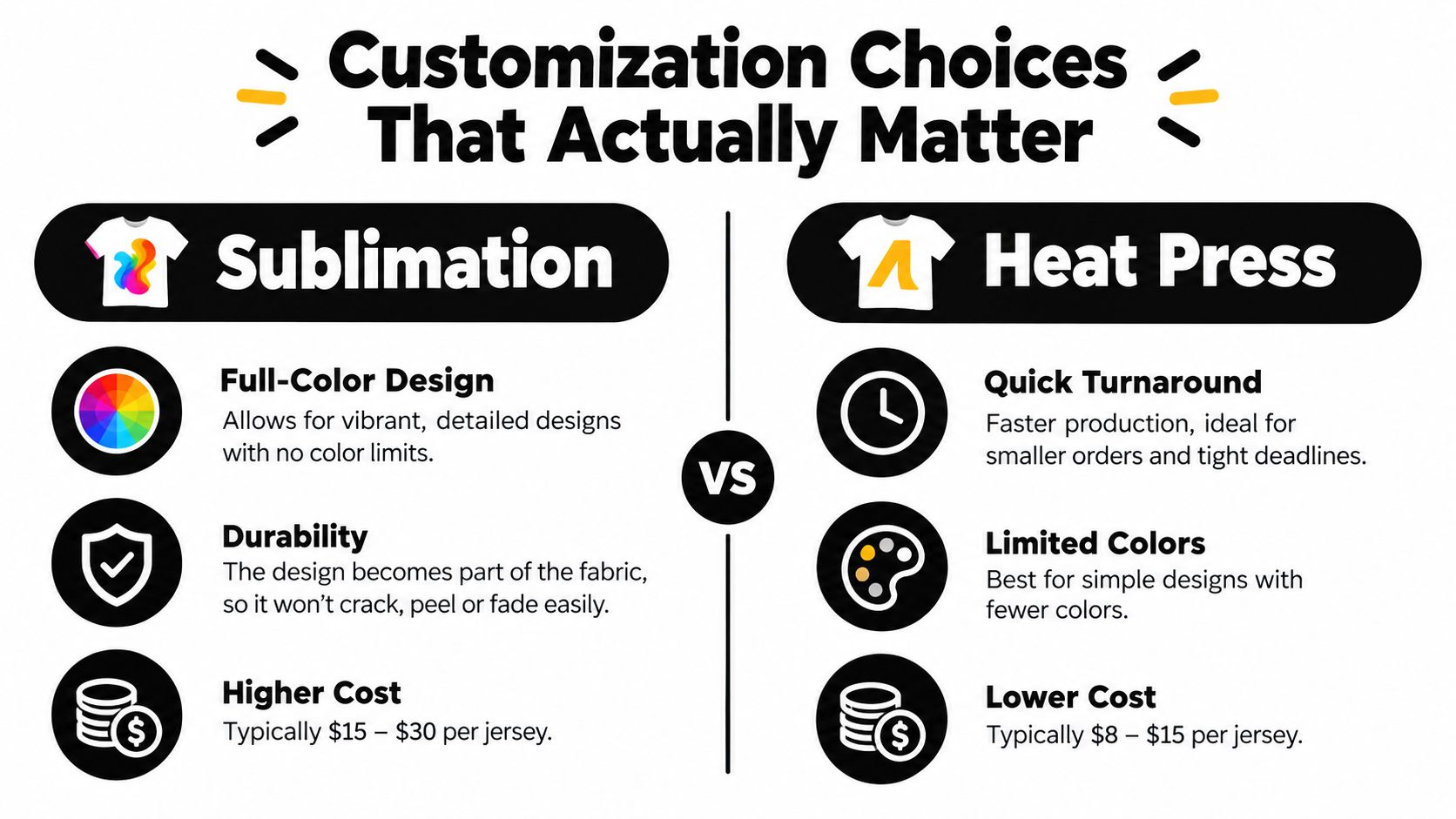
Sublimation integrates the artwork into the garment design and suits full-color patterns, but it can make later changes difficult. Heat-transfer decoration works well for names and numbers added after a roster is confirmed, and it may offer faster production, but the application needs careful testing for edge lifting and wash durability. Stitched badges can create a traditional appearance, although their attachment and edges deserve inspection.
Use a decision filter
Choose the method by balancing four outcomes:
Readability: Numbers must contrast with the shirt and remain visible from the field boundary.
Compliance: Placement, size, and additional markings must fit the competition's rules.
Transferability: A generic club shirt can serve another player more easily than a heavily personalized one.
Lifecycle cost: Replacing a number or badge should be possible without discarding the entire garment.
Sublimation makes sense when the club has a stable design and wants a unified full-shirt appearance. Heat transfer is often more flexible for roster changes, replacement shirts, and late number assignments. Neither method automatically guarantees durability. Request a decorated sample and wash it before approving the production run.
Names deserve special caution. They improve recognition for families and coaches, but they can turn a serviceable shirt into a single-player item. For younger teams with frequent growth, consider whether the identity benefit outweighs the loss of reuse. For established competitive rosters, names may be worthwhile if they remain compliant and legible.
A supplier's mockup should show the front, back, sleeves, collar, number, badge, and any sponsor placement. Don't approve from a front-only image. The finished kit has to look clear at match distance, fit the player, and remain useful when the season changes.
Ordering Workflow From Quote to Delivery
Successful ordering is project management in miniature. The administrator has to control design, roster data, sizing, decoration, payment, production, shipping, and inspection. A short quote is not enough if it leaves any of those responsibilities unclear.
Start with a written specification. Lock the shirt model, color references, logo files, number style, name treatment, size chart, decoration method, and delivery address. Collect each player's name, number, backup number, and size in one roster sheet. One person should own the master file, and every revision should have a clear date or version name.
Build quality gates into the order
Approve the design: Check contrast, number placement, sleeves, collar, and goalkeeper distinction.
Approve the roster: Confirm spelling, numbers, sizes, and the players receiving each garment.
Approve the quote: Ask whether decoration, setup, shipping, samples, corrections, and replacement handling are included.
Confirm production: Get the expected production window in writing and ask what happens if a garment is backordered.
Inspect delivery: Compare every shirt with the roster before distributing anything.
Don't accept a supplier's “match ready” language without reviewing the actual rules for your competition. Keep the approved mockup, order confirmation, roster, and inspection record together. If a partial shipment arrives, inspect and document it instead of mixing unchecked garments into the team bags.
A replacement plan matters too. Ask whether the supplier can reproduce the same color, number style, and badge treatment later. A kit that can't be matched after a player joins or loses a shirt may create more expense than its original price suggests.
Compliance Checklist Before Every Match
A comfortable shirt can still fail inspection. The team should verify equipment before leaving for the field, not after a referee identifies a problem. FIFA's equipment regulations address injury risks, shirt numbers, shorts markings where applicable, and collar construction, while IFAB Law 4 requires shirts with sleeves and suitable shin guards covered by socks.
Use two people for the audit. One reads the checklist, and the other checks the player and records pass or fail. A photographic record of the front, back, sleeve, collar, number, and accessories gives the club a consistent reference for future orders.
Check Point | Required Standard | Action if Failed |
|---|---|---|
Sleeves | Shirt has sleeves | Replace or correct the shirt before inspection |
Back number | Number is present and readable | Use an approved replacement or contact the supplier |
Shorts number | Present where the competition requires it | Confirm the rule and add compliant decoration |
Goalkeeper color | Clearly distinguishable from outfield players | Use the approved alternate shirt |
Collar and trims | No unsafe opening, cords, rigid pieces, or exposed hard components | Remove the item or substitute the garment |
Shin guards | Suitable guards are covered by socks | Stop the player from entering until corrected |
Accessories | No hazardous jewelry or unapproved items | Remove the item before warmup |
The front collar opening is limited to 5 cm under the cited FIFA equipment regulations. A manufacturer's label doesn't guarantee that every tournament will accept every design, especially when local competition rules add requirements.
Inconsistent undershirt colors, unreadable names, decorative cords, and rigid patches are common preventable issues. Record the approved design specification and repeat the audit before each match, particularly when replacement shirts or new players enter the roster.
Caring for Youth Soccer Team Jerseys Long Term
A jersey's useful life depends as much on family habits as on fabric. Wash according to the care label, turn decorated garments inside out when appropriate, avoid harsh treatment that can damage prints, and remove shirts from damp bags promptly after training. Heat, friction, and poor storage can shorten the life of numbers and badges even when the base fabric remains strong.
Store kits clean and dry between seasons. Keep spare shirts separate from active match sets, and label club-owned inventory by size and number. A simple record can show which garments are available for hand-me-downs, which need repair, and which should be retired.
Think in cost per season
Families often focus on the shirt price and overlook the full kit. Required shorts and socks, printing, shipping, replacement after growth, and whether siblings can reuse the uniform all affect affordability. U.S. families spent an average of $1,016 on a child's primary sport in 2024, while equipment and uniforms averaged $250, according to reported youth sports cost figures. A separate national summary reports that 58% of parents with children currently playing sports view equipment costs as a financial stress, and 46% of non-participating families would reconsider participation if sports were more affordable, as reported in the same source.
That context makes lifecycle planning important. Families can ask whether a club offers swaps, hand-me-downs, payment options, or a secondhand route. Clubs can reduce waste by keeping a small inventory of unpersonalized replacement garments and by explaining when a shirt should be sized up rather than replaced immediately.
Repair before replacement
Inspect the shirt after each match period. A loose hem may be repairable, while a lifting number may require reapplication. Replace a garment when the fabric, seams, or compliance-related markings no longer support safe, readable match use. Do not retire a serviceable shirt just because a player has grown if another player can use it and the customization remains appropriate.
A durable jersey creates value through repeated wear, easy care, and transfer to another player. That is why the best buying decision isn't always the lowest initial price. It is the option that remains comfortable, readable, compliant, and useful across the player's changing needs.
Villarreal Houston Academy provides structured youth soccer programs, team environments, camps, clinics, and tryouts for players from age 4 upward across the Greater Houston area. Families who want a development pathway with clear team standards and practical support around match readiness can visit Villarreal Houston Academy to explore current programs and opportunities.
Comments